What Is Paint Protection Film (PPF), and Is It Worth It?

When you invest in a vehicle you love, keeping it looking its best becomes part of the ownership experience. Unfortunately, every mile also exposes your paint to rock chips, road debris, bug splatter, scratches, stains, and other everyday hazards.

Paint Protection Film, often called PPF, provides a nearly invisible layer of protection between your vehicle's paint and the road.

For luxury, exotic, classic, and enthusiast vehicles in particular, PPF can be one of the most effective ways to preserve the finish, protect original paint, and help maintain the vehicle's condition and value over time.

What Is Paint Protection Film?

Paint Protection Film is a transparent, durable film professionally applied over a vehicle's painted surfaces.

Sometimes called a "clear bra," modern PPF is designed to conform closely to the contours of a vehicle while remaining virtually invisible. Rather than changing the appearance of your paint, it creates a sacrificial protective layer over it.

When road debris, rocks, insects, or other contaminants come into contact with a protected panel, they encounter the film before they reach the paint underneath.

In simple terms: PPF takes the abuse so your paint doesn't have to.

What does PPF protect against?

Everyday driving can cause more paint damage than many owners realize. Even a carefully maintained vehicle is regularly exposed to hazards that can permanently affect its finish.

Paint Protection Film can help protect against:

  • Rock chips and road debris
  • Light scratches and swirl marks
  • Bug splatter
  • Bird droppings and other environmental contaminants
  • Road tar
  • Minor scuffs and abrasions
  • Stains and everyday road wear

Many premium modern films also feature self-healing technology that allows minor scratches and swirl marks in the film to disappear when exposed to heat.

PPF isn't indestructible, and it can't prevent every type of damage. A significant impact can still damage the film or the vehicle underneath it. But for the everyday hazards vehicles encounter on the road, PPF provides an important additional line of defense.

Why PPF is especially valuable for luxury, exotic, and collector vehicles

A rock chip is frustrating on any car. On a high-end, exotic, classic, or collector vehicle, it can be much more significant.

Factory paint, specialty finishes, limited-production colors, and highly maintained original surfaces can be expensive—and sometimes difficult—to properly repair or replicate.

Protecting the original finish before damage occurs is often preferable to correcting damage afterward.

That's where PPF becomes particularly valuable.

Instead of waiting for chips and scratches to accumulate, PPF helps preserve the finish you already have. For owners who care deeply about their vehicle's condition, that protection can provide both practical and emotional value.

You bought the car to enjoy it. PPF can help you drive it without worrying about every piece of road debris ahead of you.

Does PPF Help Protect a Vehicle's Value?

Vehicle value depends on many factors, so PPF cannot guarantee a particular resale value. However, condition and paint quality can be especially important when evaluating enthusiast, exotic, classic, and collector vehicles.

Original paint in excellent condition is often preferable to panels that have required repainting or significant correction.

By helping prevent chips, scratches, staining, and other surface damage, PPF can help preserve the condition of the paint underneath it.

Think of it less as adding value to the vehicle and more as protecting the value and condition already there.

For a vehicle that represents a significant investment, protecting the exterior can be an important part of protecting that investment.

Which Parts of a Car Should Have PPF?

PPF doesn't have to cover the entire vehicle.

The right amount of coverage depends on the vehicle, how it's driven, where it's driven, and the owner's priorities.

High-Impact Areas

For many vehicles, the areas most vulnerable to road debris include:

  • Front bumper
  • Hood
  • Front fenders
  • Side mirrors
  • Rocker panels
  • Lower doors and quarter panels

Protecting these high-impact areas can provide targeted defense where damage is most likely to occur.

Full-Front PPF

Full-front coverage generally protects the vehicle's front-facing painted surfaces, where rock chips and road debris are most common.

This is a popular option for enthusiast vehicles that are regularly driven because it offers substantial protection without wrapping every painted panel.

Full-Vehicle PPF

For owners seeking the highest level of exterior paint protection, PPF can be applied across nearly all painted surfaces of the vehicle.

Full-vehicle coverage is particularly worth considering for high-value, exotic, collector, limited-production, or meticulously maintained vehicles where preserving the finish is a priority.

The best coverage isn't necessarily the most coverage. It's the coverage that makes sense for how you use and value your vehicle.

Can You See PPF on a Car?

High-quality PPF that has been professionally installed should be difficult to notice during normal viewing.

Modern films are engineered for exceptional clarity, allowing the color and finish of the paint underneath to remain visible.

Installation quality, however, matters enormously.

Poorly installed film may have visible edges, contamination underneath the film, bubbles, lifting, or other imperfections. Professional installation helps the film conform cleanly to complex body panels and minimizes visible seams and edges.

On a high-end vehicle, the goal shouldn't simply be to install PPF. It should be to install it in a way that complements the quality of the vehicle.

BMW PPF
Porsche PPF Details
BMW SUV PPF
Porsche PPF (1)
PPF Details

How Long Does Paint Protection Film Last?

PPF is designed to provide long-term protection, but its lifespan depends on several factors, including the film used, installation quality, exposure to the elements, driving conditions, storage, and maintenance.

Many premium PPF products carry manufacturer warranties of approximately 10 years.

Proper maintenance can help keep the film looking and performing its best throughout its service life.

When the film eventually becomes worn or damaged, it can be professionally removed and replaced, leaving the protected paint underneath in significantly better condition than it may have been without protection.

PPF vs. Ceramic Coating: What's the Difference?

PPF and ceramic coating are sometimes confused, but they serve different primary purposes.

PPF provides physical protection. Its thicker film acts as a barrier against rock chips, light scratches, scuffs, and road debris.

Ceramic coating provides surface protection and easier maintenance. It creates a slick, hydrophobic surface that can help repel water and contaminants while enhancing gloss and making the vehicle easier to clean.

A ceramic coating alone does not provide the same level of impact protection against rock chips that PPF does.

For owners looking for comprehensive exterior protection, the two services can complement each other rather than compete with one another.

PPF can protect vulnerable painted surfaces from physical damage, while ceramic protection can help enhance gloss, hydrophobic properties, and ease of maintenance.

Is PPF worth it?

For many vehicle owners, the answer comes down to a simple question:

How much does preserving your vehicle's paint matter to you?

PPF may be especially worthwhile if:

  • You own a luxury, exotic, classic, collector, or enthusiast vehicle.
  • Your vehicle has a high-value or difficult-to-replicate finish.
  • You plan to keep the vehicle for several years.
  • You regularly drive on highways or roads where rock chips are common.
  • You want to preserve original paint whenever possible.
  • You care about maintaining the vehicle's appearance and condition.
  • You want to enjoy driving the car without constantly worrying about minor paint damage.

For a vehicle that is simply transportation, PPF may not always be a priority. For a vehicle you've invested significant money, time, or passion into, the equation can look very different.

A quality PPF installation is an investment in keeping the vehicle you already love looking the way you want it to.

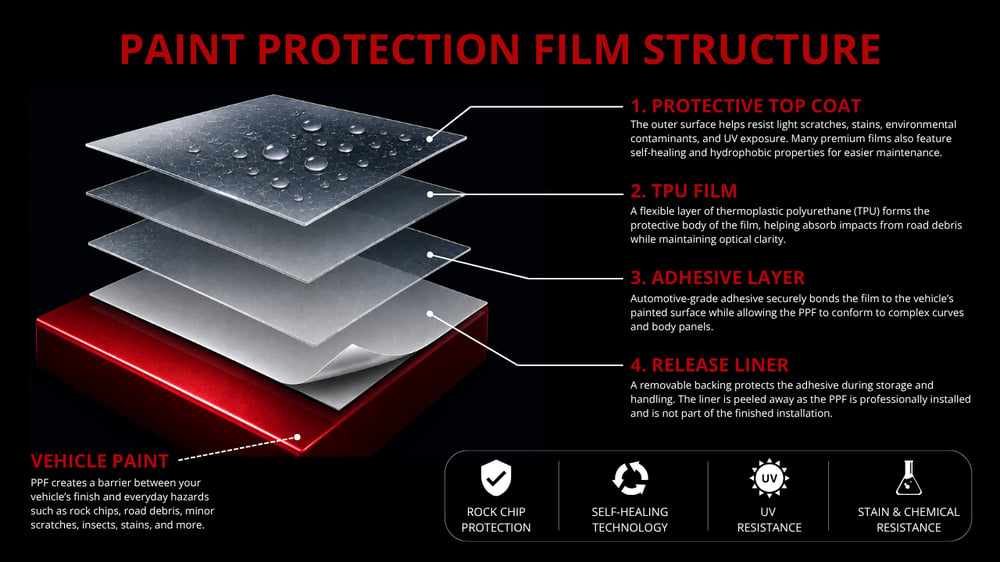
Diagram of the four layers of PPF structure

When Is the Best Time to Install PPF?

Ideally, PPF should be installed while the paint is still in excellent condition.

That's why new or newly acquired vehicles are excellent candidates for PPF. Protecting the paint before chips and scratches accumulate means there's more pristine paint to preserve.

That doesn't mean an older vehicle can't benefit from PPF.

Before installation, the paint should be thoroughly inspected and properly prepared. Depending on its condition, paint correction may be recommended to address existing imperfections before the protective film is applied.

Once PPF is installed, you're protecting what's underneath it—so proper preparation matters.

Why Professional PPF Installation Matters

The quality of a PPF installation depends on more than the film itself.

Proper installation requires experience, careful surface preparation, precision, a clean working environment, and an understanding of how the material behaves across complex curves, edges, vents, trim, and body lines.

This is particularly important with exotic and high-end vehicles, where intricate bodywork can make installation more challenging.

At CarLocker, PPF is professionally installed in our dedicated facility by a team accustomed to working with luxury, exotic, classic, and enthusiast vehicles.

We approach paint protection the same way we approach every vehicle in our care: with precision, attention to detail, and an understanding that we're not simply working on a car—we're helping protect something its owner values.

Protect Your Vehicle Before the Road Leaves Its Mark

The best time to protect your paint is before it's damaged.

Whether you're protecting a new vehicle from its first rock chip, preserving a collector car's finish, or simply looking for more peace of mind every time you drive, Paint Protection Film can provide an important layer of defense without taking away from the appearance of the vehicle.

At CarLocker, we'll help you determine the right PPF coverage based on your vehicle, how you drive it, and the level of protection you're looking for.

Interested in protecting your vehicle with PPF? Contact CarLocker to discuss your vehicle and request a custom quote.

Frequently Asked Questions

What does PPF stand for?

PPF stands for Paint Protection Film. It is a transparent protective film applied to a vehicle's painted surfaces to help defend against rock chips, scratches, road debris, stains, and other everyday damage.

Is PPF the same as a clear bra?

"Clear bra" is an older term commonly used for Paint Protection Film, particularly when referring to film installed on the front of a vehicle. Modern PPF can protect anything from individual high-impact areas to the entire vehicle.

Will PPF change the appearance of my vehicle?

High-quality clear PPF is designed to be virtually invisible and preserve the appearance of the paint underneath. Some specialty films can intentionally create matte, satin, or other finishes.

Does PPF prevent rock chips?

PPF is specifically designed to help protect painted surfaces against rock chips and road debris. No protective film can prevent every possible type of damage, but PPF can substantially reduce the everyday impacts that would otherwise reach the vehicle's paint.

Can PPF be removed?

Yes. Paint Protection Film is designed to be professionally removable. Proper removal techniques are important, particularly on older vehicles, repainted panels, or vehicles with compromised paint.

Can you put PPF over ceramic coating?

Installation order matters. If you're planning to use both PPF and ceramic protection, talk with your installer before either service is performed so the surfaces can be prepared and the products applied in the appropriate sequence.

Can PPF be applied to an older vehicle?

Yes. PPF can be installed on used vehicles as long as the paint is suitable for installation. Existing chips, scratches, or imperfections won't disappear beneath the film, which is why paint inspection and preparation are important before installation.

How much does PPF cost?

PPF pricing depends on the vehicle, complexity of its bodywork, film selected, and amount of coverage. Protecting a few high-impact areas costs less than full-front or full-vehicle coverage. CarLocker provides custom recommendations and quotes based on the individual vehicle.

Can PPF change the color of my vehicle?

Yes. While traditional Paint Protection Film is clear, colored and specialty PPF options can change the appearance of your vehicle while still providing the protective benefits of PPF. Depending on the film, you can transform your vehicle with a different color or finish, including gloss, matte, satin, and other specialty looks.

Unlike a traditional vinyl wrap, colored PPF is designed to provide a thicker protective barrier against rock chips, light scratches, road debris, and everyday wear in addition to changing the vehicle's appearance.

For owners who want a new look without permanently repainting their vehicle, colored PPF offers a way to customize the exterior while helping preserve the original paint underneath.